
How does a contractor connect your apartment to fiber? Here's how it works.
Once the Homeowners' Association gives its approval and enough residents sign up, the contractor can start connecting all the homes. The connection is free, even if you don't choose a subscription yet. But what exactly happens during this phase? And what do you need to prepare yourself? Teresa Moriana, Team Lead Relationship Management at Open Dutch Fiber, supervises apartments on a daily basis during construction and knows exactly how this process works.
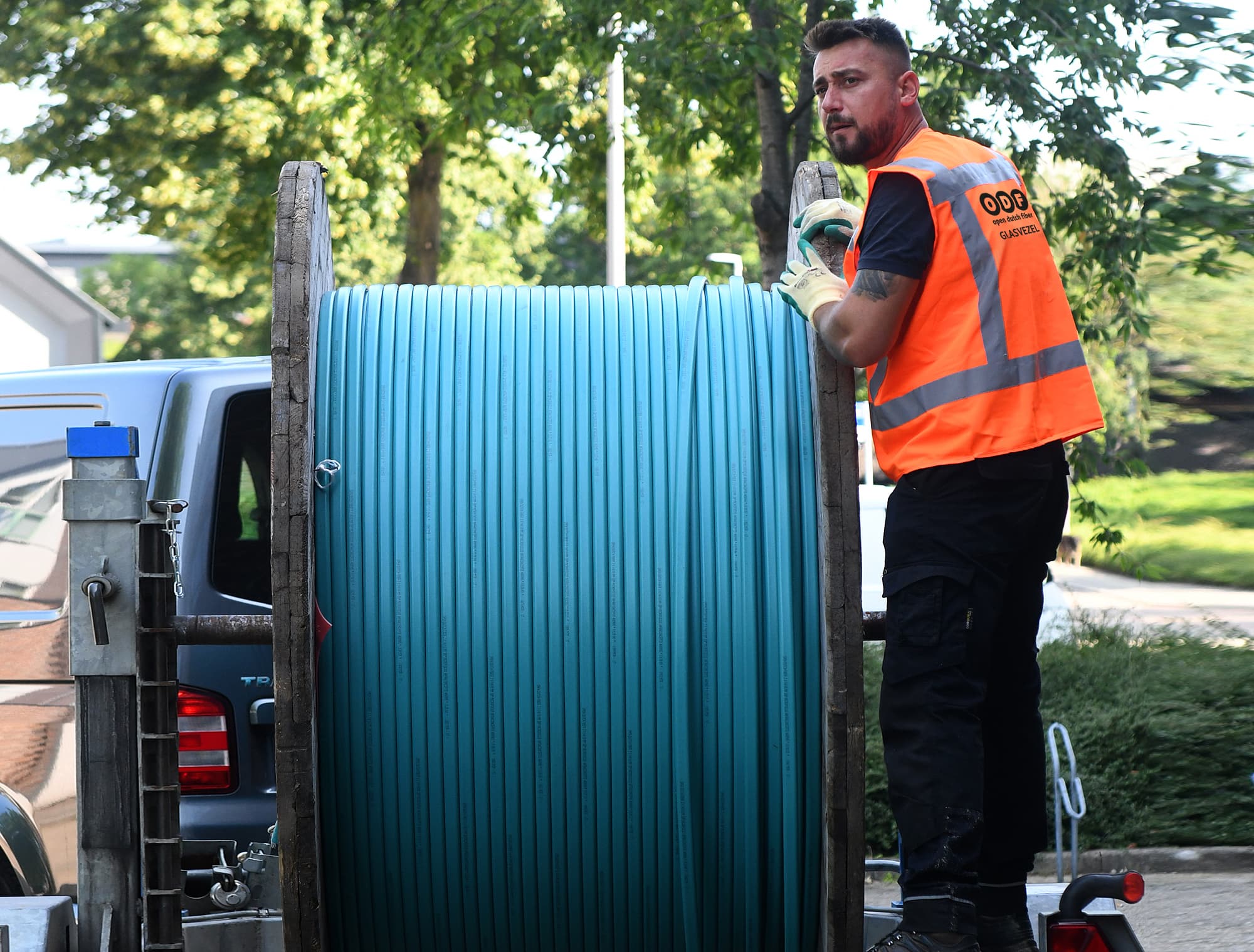 What does the contractor do during the fiber connection?
Before the contractor enters the building, a technical plan is already in place. It specifies how the cables run through the building, which routes are used, and in what order the homes are connected. This provides clarity and prevents unnecessary inconvenience.
According to Teresa, this works very efficiently. “The contractor brings the fiber cable from the technical room to each home. We install the fiber point in the home, usually in the meter box. You will need this point to connect your modem. This allows us to prepare the entire building for fiber in a short period of time.”
Where possible, the contractor uses existing shafts and common areas. Sometimes the cable route runs through the home of a downstairs or upstairs neighbor. This is necessary in order to reach all homes in the building.
If a resident does not want to grant access, the route cannot be completed and the connection of the entire building will be delayed. By informing your neighbors about what the work entails and that the connection is free of charge, you increase the chance that they will cooperate.
Also read the article: How do you convince your neighbors to sign up for fiber?
How long does it take to connect fiber to each home?
The connection itself usually takes less time than residents expect. In most apartments, it takes about 30 to 60 minutes per home. The technician follows a set order and then moves on to the next home.
Teresa sees that this reassures residents. “If we can easily access the meter cupboard, we're done in no time. It's a small intervention that yields big results.” Only if the route is technically complicated or the meter cupboard is difficult to access does it take a little longer. But almost never more than a few hours.
What can you do as a resident to prepare for the fiber connection?
With a little preparation, you can help the technician make the connection quickly and neatly. It's just a few simple things:
● Make sure you are at home at the agreed time.
● Make the meter box or agreed connection point easily accessible.
● Make sure there is enough space to work.
That's all there is to it. Teresa emphasizes that residents do not need to install anything themselves: “We install the fiber point and immediately test whether the signal is working. After that, the connection is ready for use.”
How does ODF minimize disruption?
The contractor is working through the building step by step. First, the common areas are prepared, then the apartments on each floor. This minimizes disruption to the building and keeps the turnaround time short.
Work in common areas and shafts is neatly finished so that everything looks tidy again. Safety is also taken care of.
Teresa says that residents can rely on this. “We work with experienced contractors who know exactly how to do this safely and neatly. Residents can then use their homes as normal again.”
When will your building be connected?
Want to know when it will be your apartment's turn? You can find out immediately with the postal code check. You can see whether your building is already included in the schedule, whether the fiber connection is free of charge, and when you can choose a subscription. That way, you know exactly where you stand, with no surprises.
Over Teresa Moriana
Teamlead Relationship Management
This article was written in collaboration with Teresa Moriana. Teresa Moriana is Team Lead Relationship Management at Open Dutch Fiber. She guides property owners, managers, and residents throughout the entire fiber process. From initial approval to connection in the homes, Teresa ensures that everyone knows exactly what is happening.
Bekijk ook deze artikelen!
Cheap home internet: this is how to choose the best and most affordable package in 2026
Good internet doesn't have to be expensive at all. But with so many providers and prices, it is sometimes difficult to see which package is really advantageous. What do you choose? And how do you keep costs low without sacrificing speed? We asked Jeroen Dangremond, Manager Customer Operations at Open Dutch Fiber. He sees daily how residents make their choices and knows exactly what to look out for wisely.
How do you convince your neighbors to sign up for fiber?
In flats and apartments, fiber can only be installed if enough residents participate. Sometimes this happens immediately, but often people are unsure or don't see the benefits. Yet fiber offers advantages for everyone in the building: faster internet, greater stability, and future-proofing. We asked Teresa Moriana, Team Lead Relationship Management at Open Dutch Fiber, what you can do if you want to convince your neighbors to sign up.